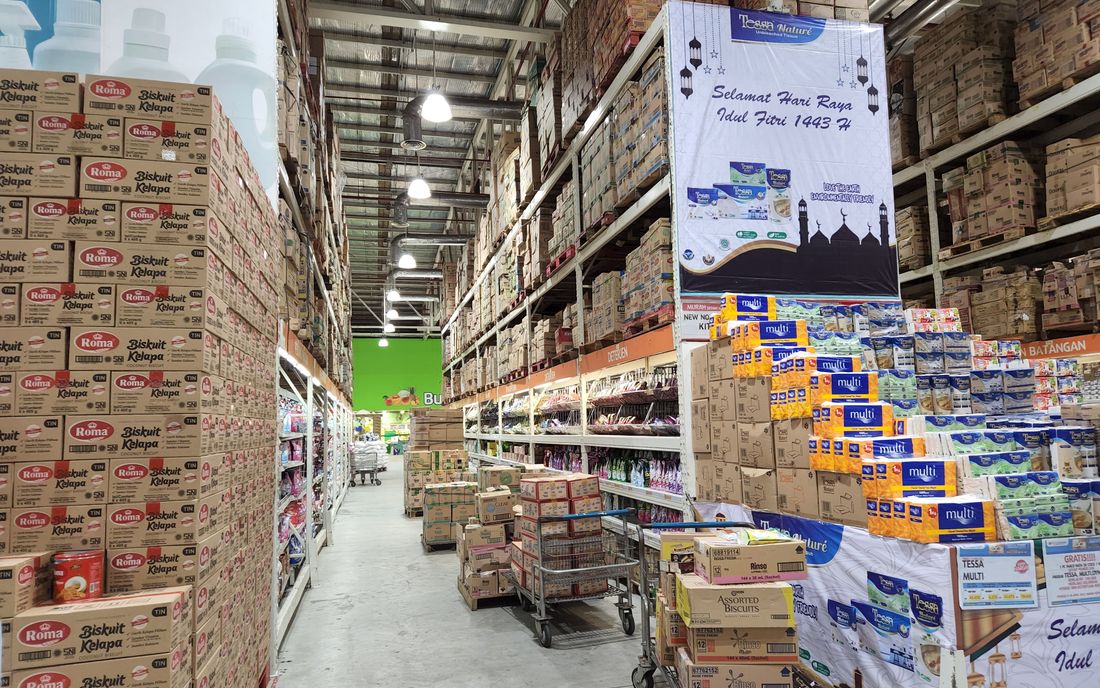
Rent or own: holding a warehouse
Ownership ties up capital while renting gives flexibility; the right choice depends on how clear the growth path is.
The head of a growing company sooner or later faces the question: do we keep renting the warehouse, or buy or build our own? Many people hold the view that "ownership is solid and renting is money down the drain". But the arithmetic often shows something different, because this decision depends not on the building itself but on the price of capital.
What ownership ties up
The value of the building freezes capital. If the building costs 30 billion so'm, that money does not work for stock, equipment, new branches or marketing. On top come repairs, taxes, insurance, security and management. Ownership has benefits too: protection from rent rises, the chance to adapt the building to your own needs (a cold room, a ramp, a special floor), the possibility that the property gains in value and the option of using it as collateral for a loan. Just remember that a rise in value is not guaranteed. There is another aspect, liquidity: money put into goods can be recovered by selling the goods, whereas selling a building can take several months and the price is not known in advance. In hard times that difference becomes decisive.
What renting gives and what it costs
The main benefit of renting is flexibility: if the business grows you move to a larger space, if it shrinks to a smaller one. The initial outlay is small, and much of the work that comes with property (depending on the lease) falls on the owner. It has a price, though: rent rises over time, the owner may refuse to renew, the money you put into adapting the building stays behind, and moving also costs: transporting goods and racking, days of downtime.
A simple calculation
An example, with illustrative figures. The building costs 30 billion so'm, rent for a similar building is 2.4 billion so'm a year, that is, 8 percent of its value. Say the price of your money, meaning loan interest or the income you would get by putting the money elsewhere, is 20 percent a year. Then putting 30 billion so'm into a building means giving up an opportunity worth 6 billion so'm a year. Add taxes, repairs and insurance of 0.5 billion so'm a year, and ownership costs 6.5 billion so'm a year against 2.4 billion for renting. For ownership to break even, the building would have to gain 4.1 billion so'm a year, about 14 percent. That is not realistic.
Now suppose the price of money is 10 percent a year. Ownership costs 3.0 + 0.5 = 3.5 billion so'm, which is 1.1 billion more than renting. To break even the building would have to rise about 3.7 percent a year, which is quite plausible. So the answer does not lie in the figure itself but in what your money costs you. To refine the calculation, also include the yearly indexation of rent: if rent rises every year, the renting side gets more expensive. So rerun the model over a five to ten year horizon with the annual rise included. That is why the cost of capital should sit at the centre of the calculation.
Mixed solutions
The choice is not limited to "rent" or "own":
- leasing, or renting with a later option to buy;
- buying the building and then leasing it back: capital is freed while the warehouse stays where it is;
- build-to-suit: the owner builds to your requirements and you rent for the long term;
- main space rented, with short-term rental or an outside logistics service for seasonal peaks.
Each mixed option has its own risk: a leasing contract fixes terms and guarantees rigidly, and a leaseback means you no longer own the building. Write out the terms of two or three options side by side.
A decision rule
In favour of ownership: over more than five years your growth plan is clear and stable; the building is specialised (a cold room, complex equipment) and suitable rental is hard to find on the market; your money is cheap or long-term low-cost finance is available; the location is strategic.
In favour of renting: the growth path is unclear; your money earns more elsewhere; the geography of your customers may change; demand is seasonal.
The simplest test is this: "will we need exactly this place in five years?" If you are not sure of the answer, renting is safer.
Conclusion
The rent-or-own decision is set by the cost of capital and the clarity of the growth path, not by the building itself. The OmborExpert specialists help compare the two options in a single model and give the manager a conclusion based on calculation.